


In the modern digital economy, collaboration has become one of the most powerful strategies for business growth. Companies no longer operate in isolation. Instead, they rely on partnerships, integrations, affiliate relationships, and collaborative ecosystems to expand their reach and improve efficiency. One term that has recently gained attention in the technology and productivity world is G15Tool Partners.
G15Tool Partners represents a collaborative ecosystem connected with the G15Tool platform. While information about the platform varies across online discussions, the concept generally focuses on creating partnerships between businesses, marketers, developers, agencies, and content creators. The goal is to improve workflow, encourage innovation, and build stronger digital relationships.
Many businesses today struggle with communication gaps, inefficient project management, scattered resources, and disconnected systems. Partnership ecosystems like G15Tool aim to solve these issues by providing a more centralized and collaborative environment. Through strategic cooperation, organizations can share knowledge, access new markets, and develop stronger digital operations.
This article provides a detailed overview of G15Tool Partners, including how the system works, its major features, partnership types, advantages, challenges, future opportunities, and best practices for successful collaboration.
Understanding G15Tool Partners
What Is G15Tool Partners?
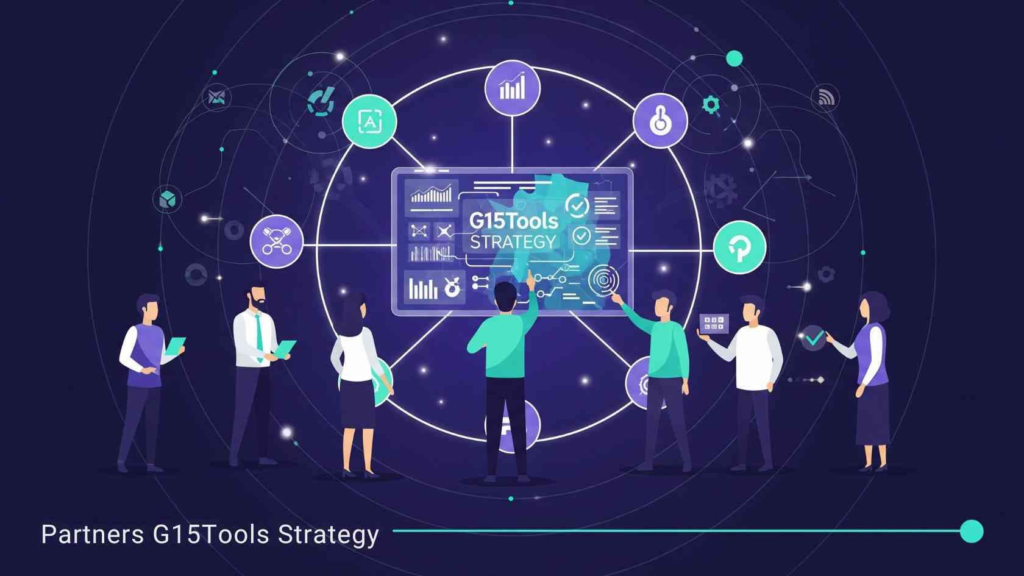
G15Tool Partners refers to a partnership ecosystem associated with the G15Tool platform. It is commonly described as a framework where businesses and professionals work together through digital collaboration tools, affiliate systems, integrations, marketing support, and shared resources.
The concept combines several important ideas:
- Digital collaboration
- Business partnerships
- Workflow management
- Shared productivity tools
- Growth through cooperation
The system appears to focus on helping companies connect with external partners more effectively while managing communication, projects, reporting, and performance tracking from one centralized environment.
The Core Idea Behind G15Tool Partnerships
The foundation of G15Tool Partners is built on collaboration. Instead of businesses trying to handle every challenge independently, the platform encourages organizations to work together and leverage each other’s strengths.
For example:
- Marketing agencies can collaborate with software providers
- Technology developers can integrate products together
- Content creators can promote tools through affiliate programs
- Service providers can manage multiple clients efficiently
This type of ecosystem creates opportunities for innovation and long term business development.
Why Digital Partnerships Matter Today

The Rise of Collaborative Business Models
Traditional business models often focused heavily on competition. Modern businesses, however, recognize that partnerships can create faster growth than isolated operations.
Several factors have increased the importance of partnerships:
- Remote work expansion
- Global digital communication
- Cloud based software systems
- Shared online marketplaces
- Increased demand for automation
- Growing need for workflow efficiency
Digital ecosystems allow businesses to scale faster while reducing operational complexity.
Benefits of Strategic Collaboration
Companies that build strong partnerships often experience several advantages:
Faster Innovation
Working with multiple organizations introduces new ideas, technologies, and expertise. This accelerates innovation and helps businesses remain competitive.
Expanded Market Reach
Partners can expose each other to entirely new audiences and customer bases.
Shared Resources
Businesses can reduce costs by sharing tools, infrastructure, expertise, and marketing efforts.
Increased Trust
Partnerships with recognized brands or respected professionals improve credibility and reputation.
Improved Problem Solving
Different perspectives often produce better solutions to complex challenges.
Main Features of G15Tool Partners
Centralized Dashboard
One of the key concepts often associated with G15Tool Partners is centralized management. Businesses can potentially manage clients, projects, communication, reports, and performance data from a single dashboard.
This reduces confusion and improves operational efficiency.
Project and Task Management
Project organization is a major part of modern collaboration systems.
Task management features may include:
- Assigning responsibilities
- Setting deadlines
- Tracking progress
- Monitoring team performance
- Managing workflows
Clear task visibility improves accountability and reduces delays.
Communication Tools
Strong communication is essential for successful partnerships. Digital collaboration systems often provide messaging tools, notifications, meeting scheduling, and real time updates.
This helps teams stay aligned throughout projects.
Reporting and Analytics
Analytics help businesses measure performance and identify opportunities for improvement.
Common reporting features include:
- Client activity tracking
- Performance summaries
- Revenue monitoring
- Productivity reports
- Marketing campaign analysis
Data driven insights improve decision making.
Integration Capabilities
Modern businesses use multiple software platforms simultaneously. Integration support allows organizations to connect different tools into one streamlined workflow.
Examples include:
- CRM systems
- Marketing automation tools
- Communication platforms
- Ecommerce solutions
- Financial software
- Analytics systems
Integrations eliminate repetitive manual work.
Types of Partnerships in G15Tool
Affiliate Partnerships
Affiliate partnerships involve promoting products or services in exchange for commissions or referral rewards.
This model benefits both sides:
- The platform gains exposure
- Affiliates generate income
Affiliate systems are common in technology and digital marketing industries.
Technology Partnerships
Technology partners typically integrate software, applications, or digital tools with the platform.
These partnerships improve functionality and create more comprehensive solutions for users.
Examples may include:
- API integrations
- Plugin development
- Cloud service compatibility
- Software synchronization
Content Partnerships
Content partnerships focus on educational and promotional collaboration.
Partners may create:
- Tutorials
- Reviews
- Guides
- Webinars
- Product demonstrations
- Training materials
Educational content helps attract and engage users.
Reseller Partnerships
Resellers offer services or products connected with the platform to their own clients.
This approach helps expand market reach while creating new revenue streams for both sides.
Co Marketing Partnerships
Co marketing partnerships involve joint promotional campaigns between organizations.
Examples include:
- Social media campaigns
- Product launches
- Online events
- Joint webinars
- Collaborative advertising
These campaigns increase visibility for all participating parties.
Who Can Benefit from G15Tool Partners?
Marketing Agencies
Agencies managing multiple clients often need centralized systems for communication, reporting, and workflow management.
Partnership platforms can simplify these processes significantly.
IT Consultants
Technology consultants can use partnership ecosystems to manage software implementations, monitor client systems, and collaborate more effectively.
Software Developers
Developers benefit from integration opportunities and increased product visibility.
Content Creators
Influencers, bloggers, and educators can participate through affiliate programs and collaborative content creation.
Small Businesses
Small businesses can access tools and partnerships that might otherwise be unavailable to them independently.
Enterprise Organizations
Larger organizations can use partnership ecosystems to coordinate departments, vendors, and external collaborators.
Key Advantages of G15Tool Partners
Improved Productivity
Centralized management tools reduce time spent switching between platforms and organizing scattered information.
Teams can focus more on meaningful work instead of administrative tasks.
Better Collaboration
Partnership ecosystems improve teamwork by simplifying communication and information sharing.
Everyone remains connected and informed throughout projects.
Increased Revenue Opportunities
Partnerships create new income possibilities through referrals, co marketing campaigns, integrations, and expanded customer access.
Stronger Brand Authority
Collaborating with trusted organizations improves market credibility and customer confidence.
Scalability
Businesses can scale operations more effectively when systems are organized and collaborative processes are streamlined.
Access to Expertise
Partnerships allow organizations to learn from experienced professionals and industry specialists.
Challenges and Potential Risks
Lack of Transparency
Some online discussions about G15Tool Partners mention concerns about limited public information regarding the platform structure, leadership, or official documentation. Businesses should always conduct independent research before entering partnerships.
Over Dependence on Partners
Relying too heavily on external partners may create operational risks if relationships end unexpectedly.
Communication Issues
Even collaborative systems can experience misunderstandings if communication practices are weak.
Data Security Concerns
Sharing information across multiple organizations requires strong cybersecurity measures.
Compatibility Problems
Not all tools or systems integrate smoothly together. Technical issues can create delays and inefficiencies.
Best Practices for Successful Partnerships
Define Clear Goals
Successful partnerships begin with clearly defined objectives.
Businesses should establish:
- Expected outcomes
- Performance metrics
- Responsibilities
- Communication standards
- Financial arrangements
Maintain Transparency
Open communication builds trust between partners.
Organizations should share updates, challenges, and expectations regularly.
Choose Compatible Partners
Strong partnerships require alignment in values, goals, and operational styles.
Compatibility improves long term success.
Use Reliable Tools
Efficient collaboration depends on stable and user friendly technology systems.
Monitor Performance
Regular performance analysis helps identify areas for improvement and ensures accountability.
Focus on Long Term Relationships
Partnerships should prioritize sustainable growth rather than short term gains.
The Role of Technology in Partnership Ecosystems
Cloud Computing
Cloud technology enables remote collaboration, file sharing, and centralized access to information.
Artificial Intelligence
AI powered systems improve automation, analytics, reporting, and workflow optimization.
Automation Tools
Automation reduces repetitive tasks and improves operational speed.
Examples include:
- Automated reporting
- Workflow triggers
- Customer notifications
- Lead tracking
Cybersecurity Systems
Secure digital infrastructure protects sensitive business information and maintains trust.
How G15Tool Partners May Support Business Growth
Expanding Customer Reach
Partnerships introduce businesses to new audiences through shared networks and marketing campaigns.
Increasing Efficiency
Centralized workflows reduce delays and improve productivity.
Enhancing Innovation
Collaborative ecosystems encourage experimentation and creative problem solving.
Supporting Digital Transformation
Modern businesses require digital adaptability. Partnership systems help organizations modernize operations more effectively.
Future of G15Tool Partnerships
Growing Demand for Collaboration
As businesses become increasingly digital, demand for partnership ecosystems is likely to continue growing.
More Integration Opportunities
Future systems may support broader compatibility with third party tools and platforms.
AI Driven Collaboration
Artificial intelligence may further improve project management, predictive analytics, and communication automation.
Remote Work Expansion
Global remote work trends will likely increase demand for collaborative digital environments.
Greater Focus on Data Analytics
Businesses increasingly rely on performance data to guide decision making.
Advanced analytics systems may become a central component of future partnership ecosystems.
How Businesses Should Evaluate Partnership Platforms
Research Reputation
Businesses should investigate reviews, user experiences, and industry credibility before joining any partnership program.
Analyze Features Carefully
Organizations should compare available tools with their operational requirements.
Assess Scalability
The platform should support future business growth.
Evaluate Security Measures
Strong data protection practices are essential.
Understand Costs and Agreements
Clear financial expectations prevent misunderstandings later.
Real World Applications of Partnership Ecosystems
Marketing Collaboration
Agencies and brands often collaborate on campaigns using shared reporting and analytics systems.
Software Integration
Technology companies connect products together to improve user experience.
Educational Partnerships
Training organizations and experts work together to create educational content and certification programs.
Ecommerce Expansion
Online businesses use affiliate and reseller systems to increase product visibility.
Why Simplicity Matters in Collaboration Platforms
Many businesses struggle with overly complicated systems. Simplicity improves adoption rates and encourages consistent usage.
A user friendly partnership system should provide:
- Clear navigation
- Simple dashboards
- Easy onboarding
- Fast communication tools
- Organized reporting systems
Complex systems often create frustration rather than efficiency.
Building Long Term Partnership Success
Trust Is Essential
Strong business relationships depend on trust, reliability, and consistent communication.
Adaptability Matters
Partnerships should evolve as industries and technologies change.
Continuous Learning Improves Results
Organizations that invest in ongoing education and improvement often achieve better collaboration outcomes.
Mutual Benefits Create Stability
The best partnerships provide value for all participants involved.
Conclusion
G15Tool Partners represents a growing concept in the world of digital collaboration, productivity systems, and strategic business partnerships. While available public information about the ecosystem may vary, the general idea centers around creating stronger business relationships through centralized tools, communication systems, integrations, and collaborative opportunities.
In today’s highly competitive digital environment, partnerships are becoming increasingly important for growth, innovation, and operational efficiency. Businesses that work together effectively can expand their reach, improve productivity, reduce costs, and access new opportunities faster than isolated competitors.
Partnership ecosystems like G15Tool demonstrate how collaboration is shaping the future of digital business operations. Whether through affiliate programs, technology integrations, co marketing campaigns, or shared workflow systems, organizations are recognizing the value of collective growth.
However, businesses should also approach partnership platforms carefully by conducting proper research, evaluating transparency, assessing security measures, and ensuring compatibility with long term goals.
As technology continues evolving, digital collaboration platforms will likely become even more important in helping businesses adapt, innovate, and succeed in a connected global economy.
FAQs
What is G15Tool Partners?
G15Tool Partners is generally described as a collaborative ecosystem connected with the G15Tool platform where businesses, creators, developers, and marketers work together through digital partnerships.
What are the main benefits of G15Tool Partners?
The main benefits may include improved collaboration, centralized management, workflow efficiency, increased market reach, and new revenue opportunities.
Who can use G15Tool Partners?
Marketing agencies, software developers, consultants, content creators, small businesses, and enterprise organizations may benefit from partnership ecosystems.
Does G15Tool Partners support integrations?
Many discussions about G15Tool suggest that integrations with other software systems are an important feature for improving workflow efficiency.
Why are digital partnerships important today?
Digital partnerships help businesses innovate faster, share resources, reduce operational complexity, and reach larger audiences.
What risks should businesses consider before joining partnership programs?
Businesses should evaluate transparency, security, compatibility, operational dependence, and communication practices before entering partnerships.
How can businesses build successful partnerships?
Successful partnerships require clear goals, open communication, reliable tools, regular performance monitoring, and mutual trust.
Are partnership ecosystems suitable for small businesses?
Yes. Small businesses can benefit from access to shared tools, expertise, and broader market opportunities.
What industries benefit most from collaboration platforms?
Technology, marketing, ecommerce, consulting, education, and digital media industries often benefit significantly from partnership ecosystems.
What is the future of digital partnership platforms?
The future will likely involve greater automation, AI powered collaboration, advanced analytics, stronger integrations, and expanded remote work support.
